Apple MacBook Pro (16-inch, M5 Max, 2026)
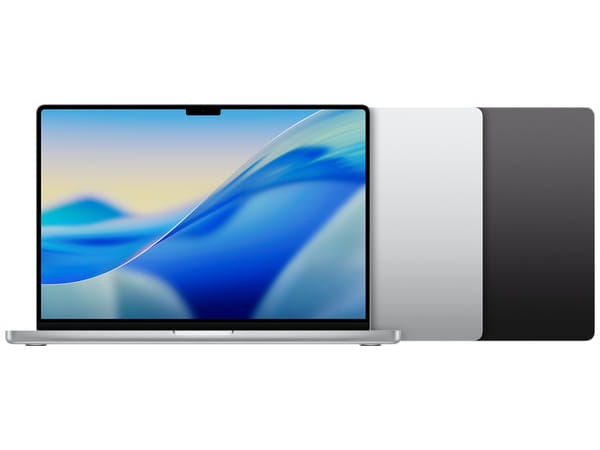








Apple MacBook Pro (16-inch, M5 Max, 2026)
This product is currently unavailable. Get an email the moment it’s back in stock.
Certified Quality & Packaging
MacBook Pro (16-inch, M5 Max, 2026)
Overview
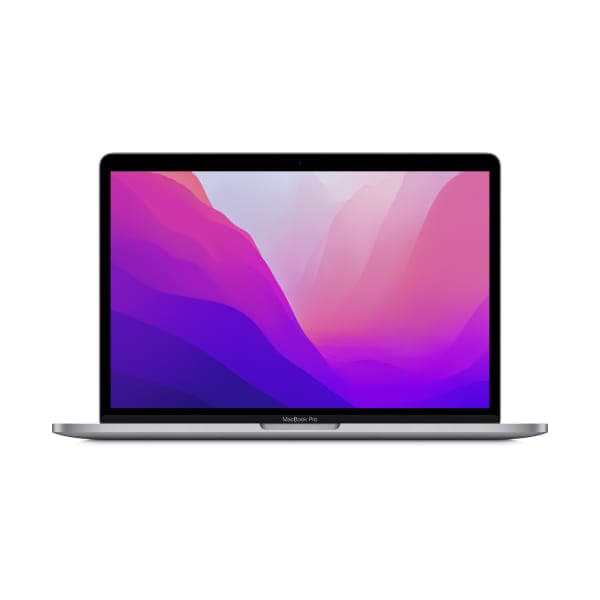
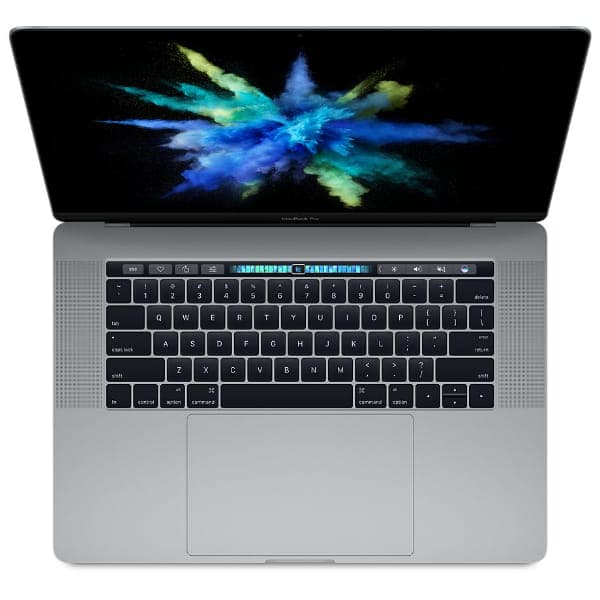
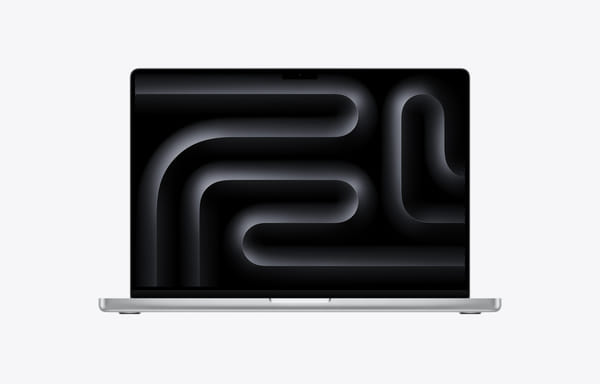
The MacBook Pro (16-inch, M5 Max, 2026) is Apple’s highest-performance portable Mac for demanding professional workflows. Its 16.2-inch Liquid Retina XDR display provides a large workspace for video timelines, complex design projects, software development and technical applications.
The M5 Max combines an 18-core CPU with a 32-core or 40-core GPU, up to 128GB of unified memory and dedicated media engines. It is particularly well suited to high-resolution video production, 3D rendering, visual effects, artificial intelligence workloads and other tasks that can use its additional graphics and memory capacity.
When buying a used or open-box unit, verify its GPU, unified memory and SSD configuration because these components cannot be upgraded later. Check the battery cycle count and maximum capacity, ensure Activation Lock and device management have been removed, and test the display, keyboard, trackpad, speakers, camera, ports and MagSafe cable. Apple sells the power adapter separately for this model, so confirm what the listing includes.
Quick Facts
Feature | Details |
|---|---|
Launch Year | 2026 |
Display | 16.2-inch Liquid Retina XDR |
Resolution | 3456 × 2234 pixels |
Processor | Apple M5 Max |
CPU and GPU | 18-core CPU with 32-core or 40-core GPU |
Unified Memory | 36GB; configurable to 48GB, 64GB or 128GB |
Storage | 2TB SSD; configurable to 4TB or 8TB |
Battery Life | Up to 22 hours of video streaming |
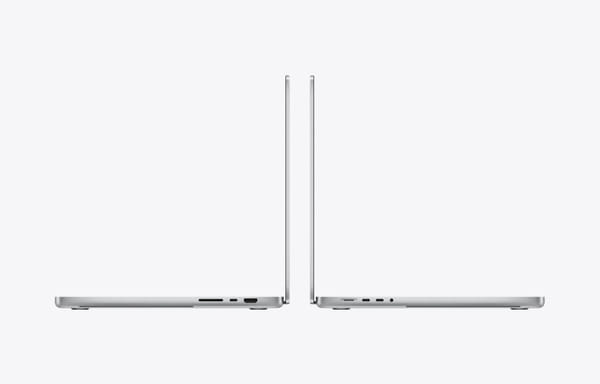
Ports | Three Thunderbolt 5, HDMI, SDXC, MagSafe 3 and headphone jack |
Weight | Approximately 2.15kg |
Key Highlights
M5 Max Graphics and Memory Performance
The M5 Max provides an 18-core CPU and a choice of 32-core or 40-core GPU. Memory bandwidth reaches 460GB/s with the 32-core GPU or 614GB/s with the 40-core GPU, supporting large professional projects and data-intensive applications.
Why it matters:
Accelerates complex 3D rendering and visual-effects workflows.
Supports larger projects without relying heavily on storage swapping.
Hardware-accelerated ray tracing benefits compatible graphics software.
High memory bandwidth helps process large creative datasets.
Active cooling supports sustained performance during lengthy workloads.
Advanced Media Engines
The M5 Max incorporates hardware acceleration for H.264, HEVC, ProRes and ProRes RAW. It also includes two video-encoding engines, two ProRes encode-and-decode engines and hardware AV1 decoding.
Why it matters:
Reduces export times in supported video-editing applications.
Handles multiple high-resolution video streams more efficiently.
Improves performance when working with ProRes and ProRes RAW footage.
Dedicated engines leave more CPU and GPU resources available.
AV1 decoding supports efficient playback of compatible online media.
Large XDR Display and Multi-Monitor Support
The 16.2-inch Liquid Retina XDR display combines a 3456 × 2234 resolution with P3 colour, True Tone and adaptive refresh rates up to 120Hz. The M5 Max can also operate up to four external displays while retaining the built-in screen.
Why it matters:
Provides extensive space for professional tools and timelines.
High resolution keeps detailed graphics and text sharp.
XDR brightness improves compatible HDR production and playback.
ProMotion makes interface movement appear smoother.
Four-display support enables advanced desktop workstations.
Key Features Explained
Feature | Specification | Why It Matters |
Processor | Apple M5 Max | Built for highly demanding creative, technical and computational workloads |
CPU | 18-core CPU | Provides strong multi-core performance for rendering, compiling and simulation |
GPU | 32-core or 40-core GPU | Accelerates 3D graphics, visual effects, machine learning and compatible games |
Neural Engine | 16-core Neural Engine | Speeds up supported machine-learning and Apple Intelligence tasks |
Unified Memory | 36GB, 48GB, 64GB or 128GB | Supports large projects, datasets and intensive professional multitasking |
Memory Bandwidth | 460GB/s or 614GB/s | Allows the processor and GPU to access large amounts of data quickly |
Storage | 2TB, 4TB or 8TB SSD | Provides fast access to large video libraries, applications and project files |
Display | 16.2-inch Liquid Retina XDR | Offers a spacious workspace with strong contrast, brightness and colour |
Refresh Rate | Adaptive ProMotion up to 120Hz | Produces smoother scrolling, animation and supported video playback |
External Displays | Up to four external displays | Supports complex editing, development, monitoring and production setups |
Ports | Three Thunderbolt 5, HDMI, SDXC and MagSafe 3 | Connects professional displays, storage, cameras and charging equipment |
Camera | 12MP Center Stage camera with Desk View | Supports clearer video calls, automatic framing and an overhead desk perspective |
Audio | Six-speaker system and three-microphone array | Provides strong built-in playback and clearer voice recording |
Wireless | Wi-Fi 7 and Bluetooth 6 | Supports newer wireless networks and compatible accessories |
Battery and Charging | 100Wh battery with 140W fast-charge support | Delivers long unplugged use and faster charging with suitable equipment |
Compare Related Models
Feature | MacBook Pro 16-inch M5 Max 2026 | MacBook Pro 16-inch M5 Pro 2026 | MacBook Pro 16-inch M4 Max 2024 | MacBook Pro 14-inch M5 Max |
Display Size | 16.2-inch | 16.2-inch | 16.2-inch | 14.2-inch |
Display Type | Liquid Retina XDR | Liquid Retina XDR | Liquid Retina XDR | Liquid Retina XDR |
Resolution | 3456 × 2234 | 3456 × 2234 | 3456 × 2234 | 3024 × 1964 |
Refresh Rate | Up to 120Hz | Up to 120Hz | Up to 120Hz | Up to 120Hz |
Processor | M5 Max | M5 Pro | M4 Max | M5 Max |
CPU | 18-core | 18-core | 14-core or 16-core | 18-core |
GPU | 32-core or 40-core | 20-core | 32-core or 40-core | 32-core or 40-core |
Starting Unified Memory | 36GB | 24GB | 36GB | 36GB |
Maximum Unified Memory | 128GB | 64GB | 128GB | 128GB |
Starting Storage | 2TB | 1TB | 1TB | Configuration dependent |
Maximum Storage | 8TB | 4TB | 8TB | 8TB |
Thunderbolt | Thunderbolt 5 | Thunderbolt 5 | Thunderbolt 5 | Thunderbolt 5 |
External Displays | Up to four | Up to three | Up to four | Up to four |
Video Streaming | Up to 22 hours | Up to 24 hours | Up to 21 hours | Configuration dependent |
Weight | About 2.15kg | About 2.14kg | About 2.15kg | About 1.6kg |
Best Advantage | Maximum portable Mac performance | Better performance-to-price balance | Potentially lower-cost Max option | Max performance in a smaller body |
Which Model Should You Choose?
Choose This Model | Recommended For |
MacBook Pro 16-inch M5 Max 2026 | Professionals who require the highest GPU performance, memory capacity, storage and external-display support in a MacBook. |
MacBook Pro 16-inch M5 Pro 2026 | Users who want the same large display and strong professional performance without paying for unused M5 Max capacity. |
MacBook Pro 16-inch M4 Max 2024 | Buyers who need Max-level graphics performance but can obtain the older model at a more attractive price. |
MacBook Pro 14-inch M5 Max | Mobile professionals who need M5 Max performance in a smaller and lighter laptop. |
Alternative Models
If you are comparing before buying, you may also want to check these related SellUp Marketplace pages:
MacBook Pro (16-inch, M5 Pro, 2026) – A more balanced alternative with the same display and connectivity but lower maximum graphics and memory capacity.
MacBook Pro (16-inch, M4 Max, 2024) – A closely related older Max model that may provide better value for demanding professional work.
MacBook Pro (14-inch, M5 Max, 2025) – A more portable alternative for professionals who still require Max-level performance.
MacBook Pro (16-inch, M3 Max, 2023) – An older high-performance model worth considering when price is a greater priority than the latest connectivity.
Common Questions
Is the MacBook Pro 16-inch M5 Max suitable for everyday use?
Yes, but its performance and price exceed what most everyday users need. It is primarily intended for professionals running demanding graphics, video, development, engineering or computational applications.
Is the MacBook Pro 16-inch M5 Max good for gaming?
Its powerful GPU, hardware-accelerated ray tracing and 120Hz ProMotion display can deliver strong performance in compatible games. However, macOS offers fewer game titles than Windows, so buyers should confirm software compatibility first.
What is the difference between the M5 Max and M5 Pro versions?
The M5 Max offers up to a 40-core GPU, 128GB of unified memory, 8TB of storage and four-display support. The M5 Pro reaches a 20-core GPU, 64GB of memory, 4TB of storage and support for up to three external displays.
How many external displays can the M5 Max model support?
It supports up to four external displays in addition to the built-in screen. Supported resolutions and refresh rates depend on the number of monitors and whether they are connected through Thunderbolt or HDMI.
Can the memory or SSD be upgraded later?
No. The unified memory and SSD are not user-upgradeable after purchase. Buyers should select a configuration that can accommodate their expected project sizes and software requirements.
Is the MacBook Pro 16-inch M5 Max 2026 worth buying?
It is worthwhile for professionals who can use its additional GPU cores, memory bandwidth, media engines and high memory capacity. Buyers with less intensive workloads will generally receive better value from the M5 Pro version.
Why Buy the MacBook Pro 16-inch M5 Max 2026?
The MacBook Pro (16-inch, M5 Max, 2026) is designed for professionals who need maximum portable Mac performance. Its high-end GPU options, extensive unified memory, dedicated media engines, large XDR display and support for four external monitors make it particularly suitable for demanding production environments.
Compare MacBook Pro (16-inch, M5 Max, 2026) listings on SellUp Marketplace to find the condition, unified memory, storage size, and price that suits your budget.